Skip to content

The School

EduCARING for Universal Happiness & Wellbeing

Educating for Lifelong Citizenship since 1997, and Bhutan's first lighthouse school for wellbeing in education.

Apply for ELC

Our approach

One school, one program, one idea.

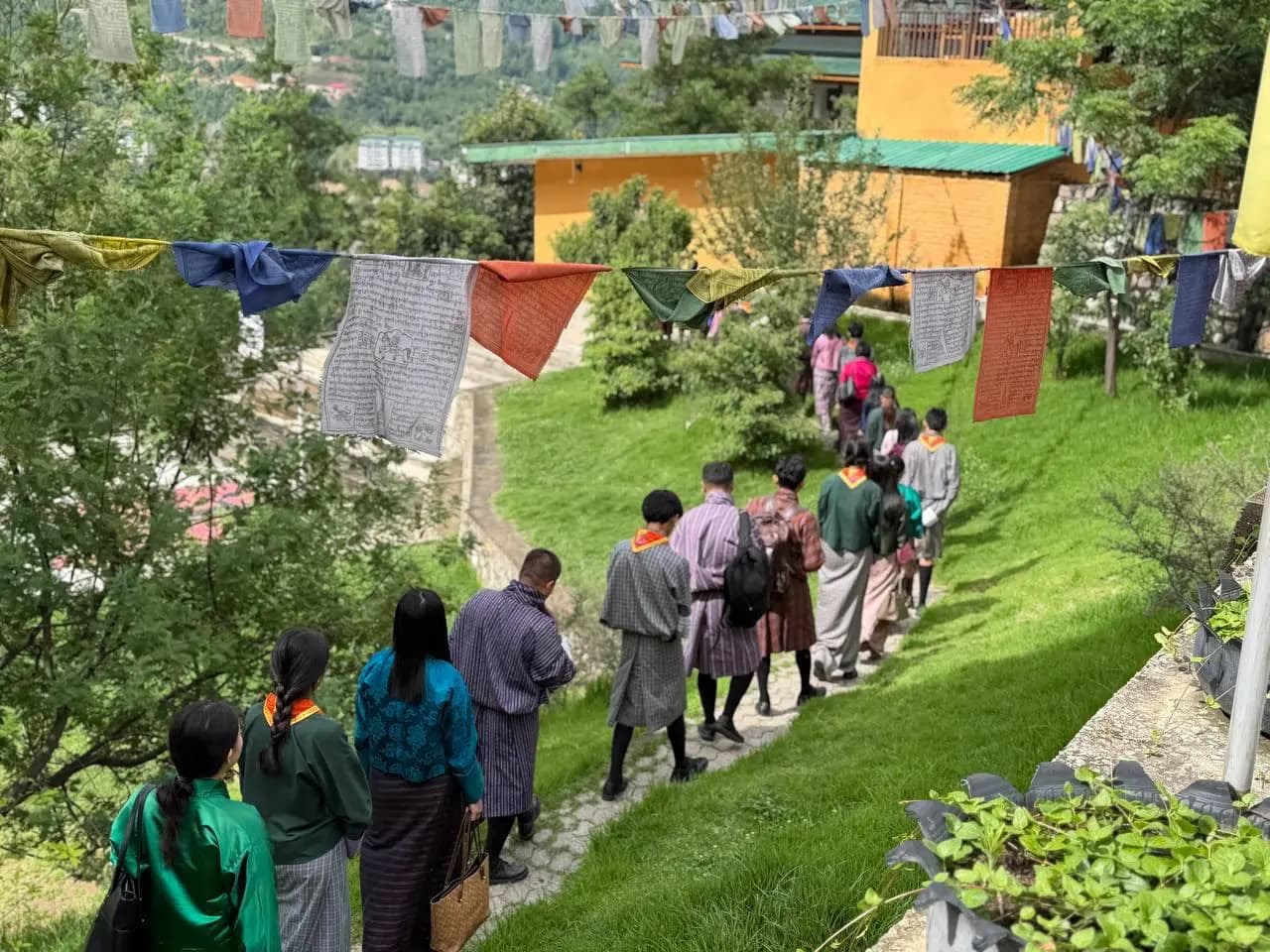
ELC students and teachers walking single file along a grass path under prayer flags

ELC is a school in Thimphu where wellbeing is not a subject on the timetable. It is the ground everything else is built on.

We teach the full national curriculum from pre-primary to Class 10, and we take academic results seriously. But we start somewhere else: with the conviction that a child who feels well will do well, and that a child who is known, greeted by name and trusted with real responsibility will learn more than a child who is merely instructed.

In a world that increasingly tells our children they need more money, power, fame and achievement in order to be happy, we teach them that they are already enough. Enough in their kindness. Enough in their talents. Enough in the people who love them. In one word: Chokshay, contentment.

It is a simple idea. Living it every day, for more than twenty-five years, is what makes ELC what it is.

Mission

Embracing, through creative partnerships and authentic learning experiences, practices & pathways that are mindful, joyful & empathic in realizing our ultimate vision of universal happiness & wellbeing.

We began Educating for Lifelong Citizenship
1997We began Educating for Lifelong Citizenship
Day school and ResLIFE residential program
PP to Class 10Day school and ResLIFE residential program
Lighthouse school for the Four Pillars of Wellbeing
Bhutan's firstLighthouse school for the Four Pillars of Wellbeing
Districts reached by Design for Change Bhutan (founded at ELC)
20Districts reached by Design for Change Bhutan (founded at ELC)

Our story

From the Early Learning Centre to Educating for Lifelong Citizenship.

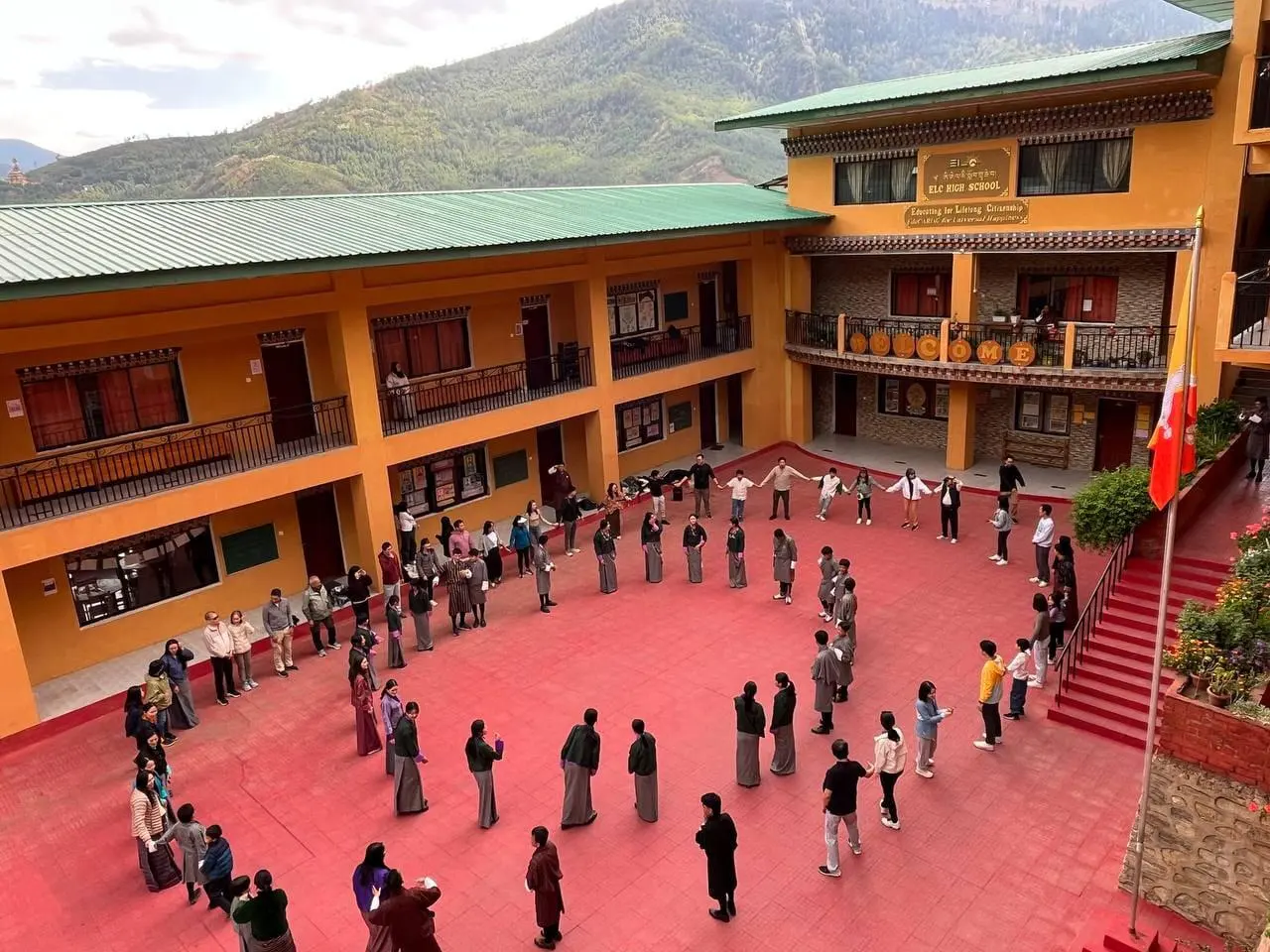
The whole school standing in a circle in the ELC courtyard, hands joined, with the Thimphu hills behind

ELC opened its doors as the Early Learning Centre. The name described exactly what it was: a small place where young children began.

The children grew, and so did the school. Today ELC runs from pre-primary through Class 10, with a residential program and a wide co-curricular life, and the initials have come to stand for something larger: Educating for Lifelong Citizenship. The change was not a rebrand. It was a recognition that what we had been doing all along was not preparing children for the next examination, but for a whole life as thoughtful, caring, capable citizens.

Along the way, the school became a place other schools came to visit. Bhutan's Ministry of Education mandated Educating for GNH in 2010, and like every school we had to work out what that meant in a real classroom on a real Tuesday morning. Mindfulness, our Founding Principal has said, was widely assumed to be something for hermits. It took years of patient practice to show that it belonged to children too.

That patience is why, in 2019, ELC became the first school in Bhutan to adopt the Contentment Foundation's Four Pillars of Wellbeing, and why the practices did not stay inside our walls.

Leadership

Deki Choden

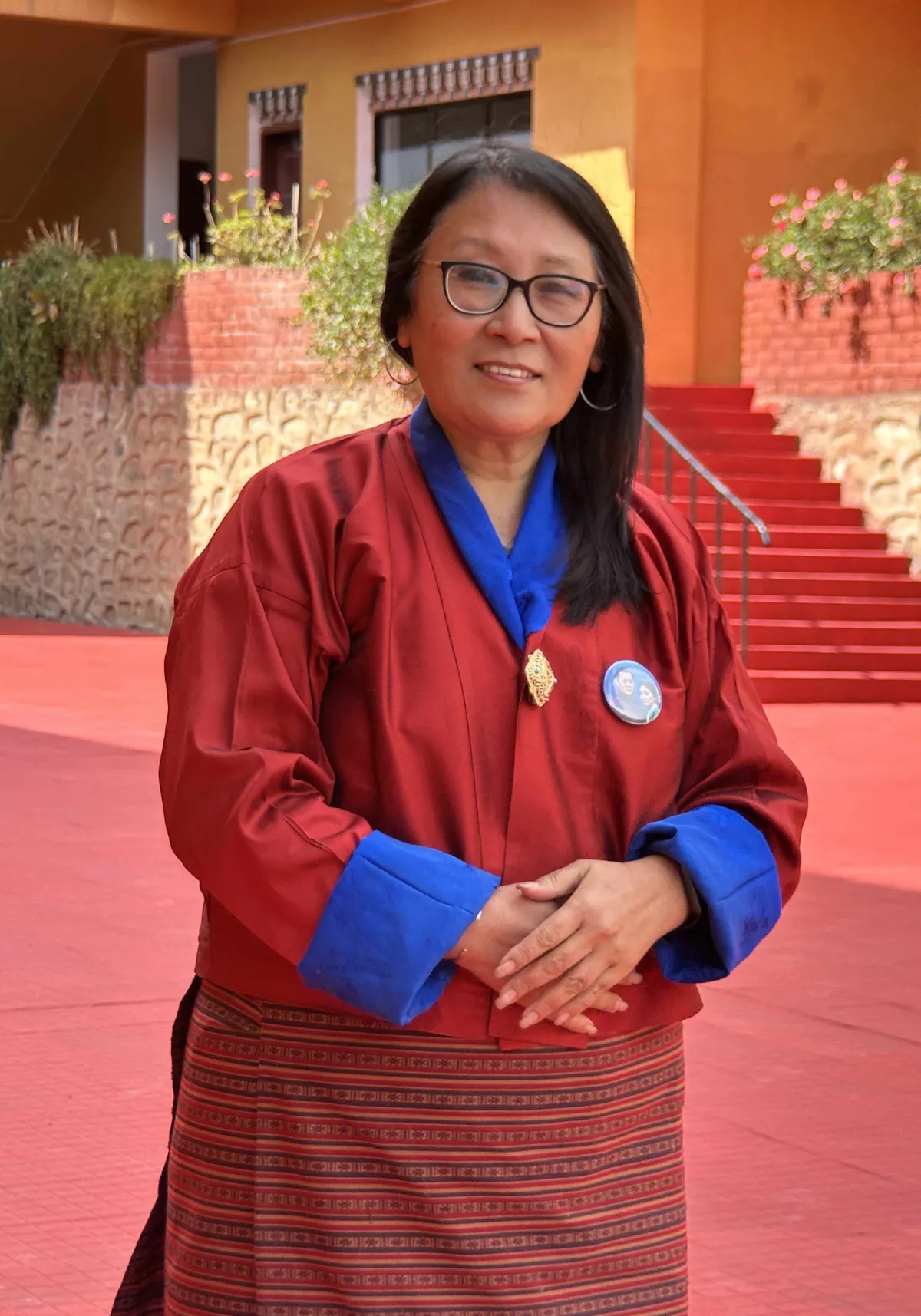
Portrait of Deki Choden, Founding Principal

Founding Principal, ELC School

Deki Choden is the Founding Principal of ELC School, the Educating for Lifelong Citizenship School, an award-winning institution that has partnered with the Contentment Foundation, His Holiness the Dalai Lama's Mind and Life Institute Call to Care Initiative, Harvard University's Making Caring Common Project, the World Happiness Foundation, and leading local institutions including the Bhutan Echoes Literature and Arts Festival and the Royal University of Bhutan, to promote happiness and wellbeing in education.

She is the Founding Country Lead of Design for Change Bhutan, a child-centered educational approach which has spread to over 400 schools in all 20 districts of Bhutan since 2010, empowering thousands of young students to change their communities for the better.

Deki received a BA from Barnard College in New York and an MA in Education from Reading University in the United Kingdom. She was honored among the Asian Heroes of 2024 by Seagull Philippines and is a member of the Joint Steering Committee for Education Reform established by the Ministry of Education and Skills Development.

Having served as an educator for over 40 years, including as one of the first Bhutanese women lecturers at Sherubtse College, she is a proponent of EduCARING for Universal Happiness and Wellbeing: the belief that educating the heart is as important as educating the mind if we are to realize the vision of Gross National Happiness in education.

Follow Deki on Facebook

The wider team

The people behind the school

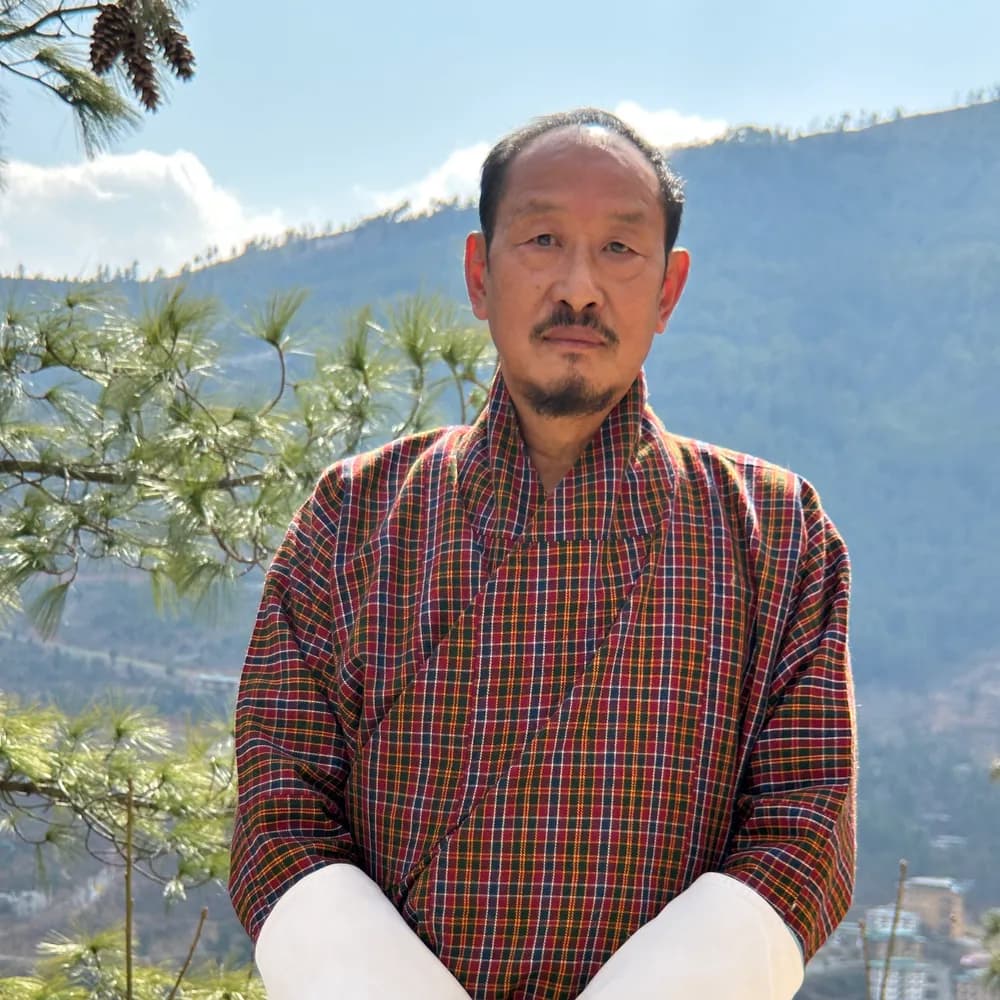
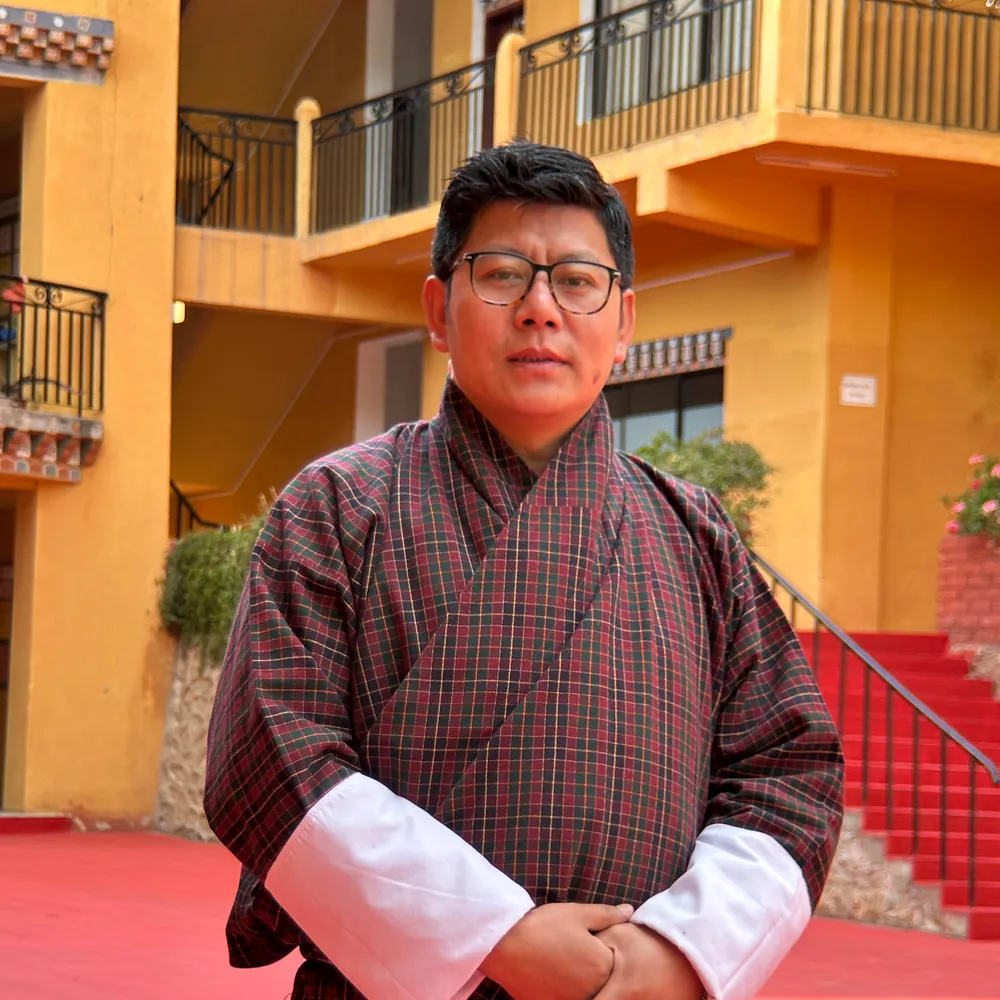
Kinzang Namgay in a checked gho, on a terrace above the Thimphu valley

Kinzang Namgay

Advisor

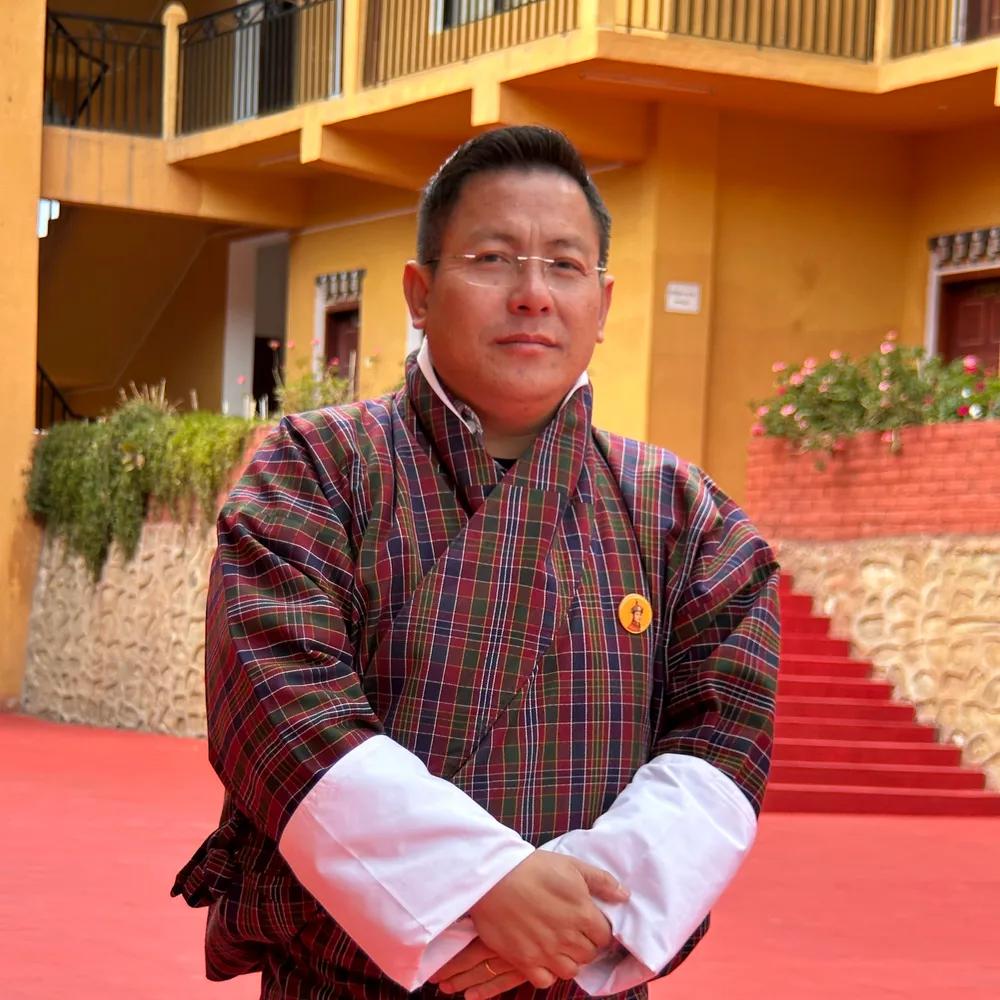
Tshewang Loday in a maroon checked gho, in the school courtyard

Tshewang Loday

Vice Principal

Yonten Nidup in a checked gho, in the school courtyard

Yonten Nidup

Deputy Vice Principal

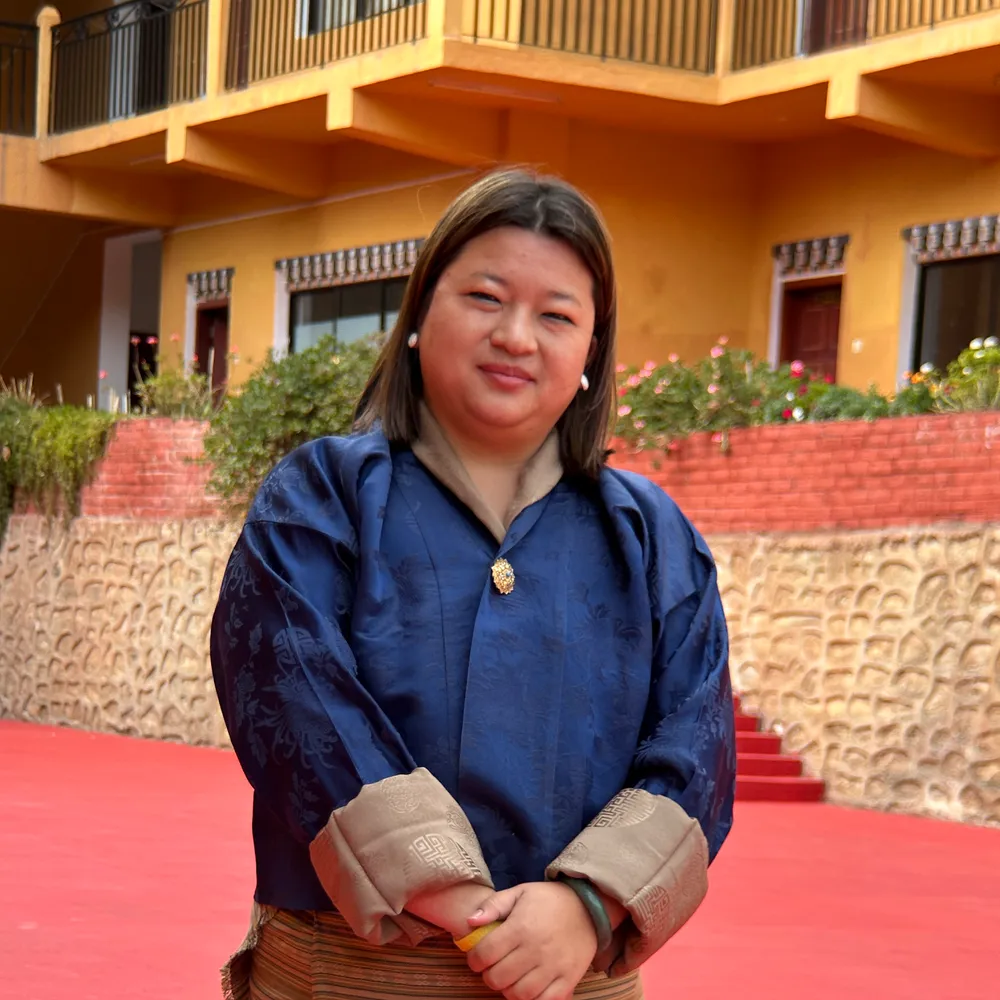
Karma Phuntsho Wangmo in a blue silk kira jacket, in the school courtyard

Karma Phuntsho Wangmo

Deputy Vice Principal

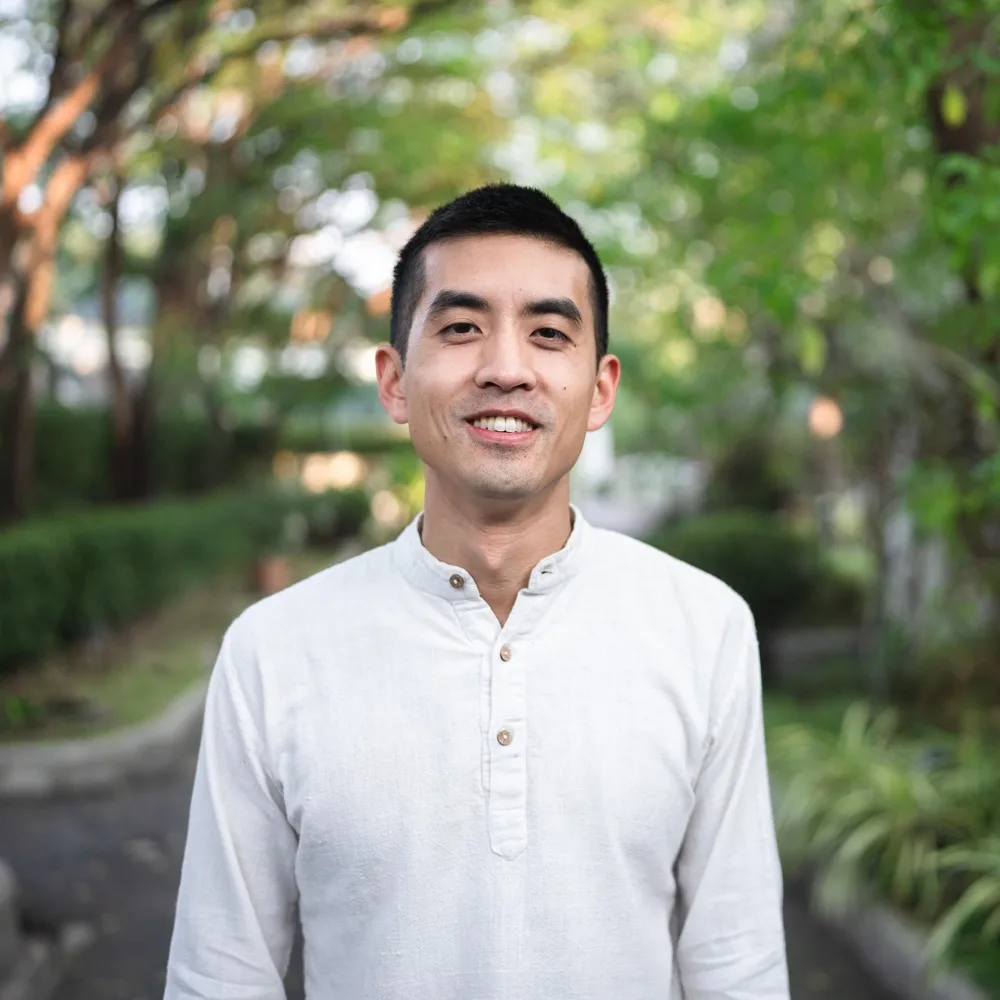
Tim Huang in a white collarless shirt, on a tree-lined garden path

Tim Huang

Wellbeing Lead & Partnerships

What makes us different

Five commitments a visitor can see.

We would rather be judged on what happens in our corridors than on what appears in our brochure. These are the things you would notice within an hour of walking through the gate.

  1. 1

    Every child is greeted by name

    Our student leaders welcome learners at the gate on Monday mornings, alongside the Teacher on Duty. Before a single lesson begins, every child has been seen, expected and wanted.

  2. 2

    The day begins in joy

    Assembly and the first minutes of class bring rhymes, songs, energizers, movement and a mindful moment, so that children arrive in the room before they are asked to arrive in the lesson.

  3. 3

    An adult is present, not just watching

    Supervision asks whether anything has gone wrong. Presence asks how each child is doing. Our Teacher on Duty walks where the children walk and sits where they sit.

  4. 4

    Mistakes are met with dialogue

    A child who is misbehaving is most often a good kid having a hard time. We look for the thorn underneath the behavior, and we repair relationships rather than reaching for punishment.

  5. 5

    Children are trusted with real responsibility

    Leadership is spread widely rather than concentrated among a few. Students run elections, facilitate their own circles, and take on projects that change something in their community.

Daily life

What the hours actually feel like.

The gong

At the top of every hour, a mindfulness gong sounds across the school. Everyone stops, whatever they are doing, and takes one conscious breath together. Students, teachers, visitors, the principal. It lasts a minute. It is the sound of the school agreeing, several times a day, to come back to the present moment.

Quality Class Time
Thirty minutes each morning in the home room, with the teacher as facilitator rather than instructor. Students raise what is on their minds, solve problems together, and practice the ordinary skills of listening and being listened to.
Wellbeing circles
A dedicated period where a class sits in a circle and talks honestly: about inner weather, about gratitude, about worries and hopes. Emotions are named rather than managed away. All of them are welcome, including the ones we usually push aside.
Quality School Time
Every Wednesday the whole school gathers for thirty minutes to celebrate what has gone well, raise what has not, and watch what students have made. The audience is expected to respond thoughtfully. As we put it here: when we extend care to others and share those stories, we all grow Smart Hearts.
Wednesday co-curriculars
A full day given to the many ways a child can be intelligent: performing arts, physical education, visual arts and crafts, film-making and literacy. Every child finds something they are good at, which is not a luxury but the foundation of a willingness to try.
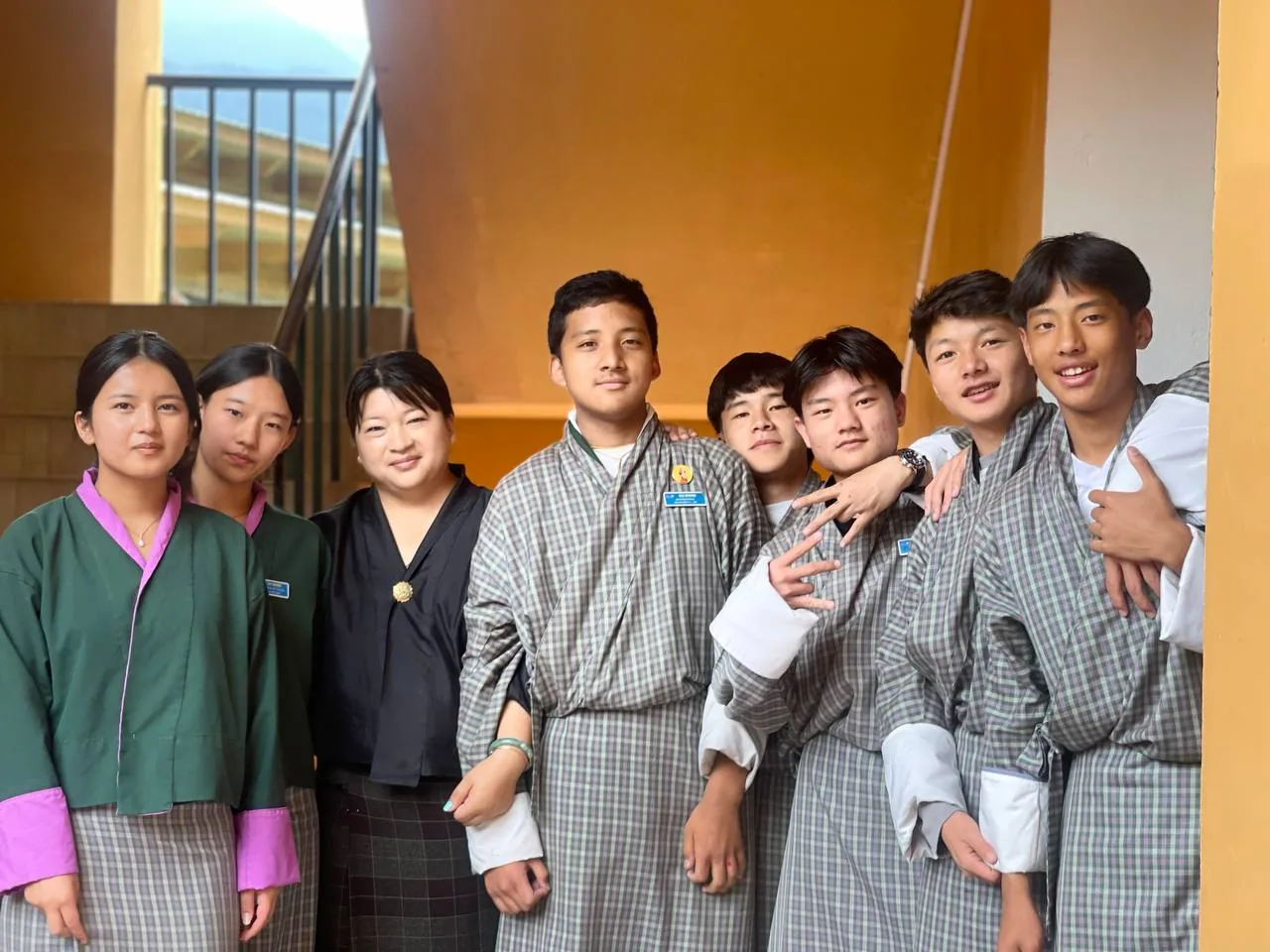
A group of ELC students in traditional gho and kira, with a staff member, smiling together on the school stairwell

Wellbeing

Bhutan's first lighthouse school for wellbeing.

In 2019, ELC became the first school in Bhutan to adopt the Contentment Foundation's Four Pillars of Wellbeing. We began not with the students but with the adults, on the understanding that no teacher can pour from an empty cup, and that children learn wellbeing far more from what is modeled than from what is said.

What followed was not a program delivered but a culture grown. Bhutanese scholars and practitioners helped root the framework in our own language and traditions, so that the pillars came to be expressed through moelam, chokshay, nyingje and gatshor. Contemporary lessons on the science of emotion sit alongside Choeshed Leyrim spiritual programs drawing on Bhutan's Vajrayana heritage.

The Contentment Foundation calls ELC a lighthouse school: a place where the practices of wellbeing are not simply taught but lived throughout the culture of the school. From here the work traveled, to a valley of schools in Paro, to annual retreats for school counselors from across the country, and into national conversations about what Bhutanese education should be.

The wellbeing programs in full

The Four Pillars

  • Mindfulness
  • Community
  • Self-Curiosity
  • Contentment and Balance

Rooted in our own words

Moelam
Intention
Chokshay
Contentment
Nyingje
Compassion
Gatshor
Gratitude
Wellbeing is the non-negotiable subject every school should have. It's been a gift that our children have the language to name what they feel. They will be a force of good, not just for themselves, but for the world.
Deki Choden · Founding Principal

ELC works alongside the Contentment Foundation Bhutan to share these practices with other schools, as our small part in realizing the vision of GNH in education.

Student agency

Two words that change a child: I CAN.

Feel

a problem that genuinely bothers them

Imagine

a solution

Do

it

Share

the story of what changed

Design for Change asks children to do four things, and it is deceptively simple. It turns children from recipients of a curriculum into people who believe they can act on the world.

ELC is the Design for Change country partner for Bhutan, and our Founding Principal is its Founding Country Lead. Since 2010, DFC Bhutan has spread to more than 400 schools across all 20 districts of the country, empowering thousands of children to change their communities for the better. Its influence now reaches further still: the approach has been carried into the national Scouts curriculum in schools across Bhutan.

At ELC, every class undertakes a Design for Change project, from pre-primary to Class 10. Our students' Stories of Change have become part of how the school understands itself.

Stories of Change

  • 2010ELC Says NO to Packaged Food
  • 2012ELC Says NO to Hurtful Name-Calling
  • 2016Here Today, Here Tomorrow: ELC's Hanky Policy
  • 2023Mission Stoppable: ELC Says NO to Drugs and Alcohol
  • 2024Hurt People Hurt People: ELC Says NO to Bullying

A single project, done properly, touches all four pillars of Gross National Happiness. When a class replaces plastic fencing with locally made bamboo, they are exercising governance by taking ownership of a problem, sustainable development by using local materials and skills, environmental conservation by choosing what will not outlive them, and cultural preservation by valuing a technique their grandparents knew.

Programs

The rest of what a school is for.

Democracy in Action

Student leader elections run along Election Commission of Bhutan guidelines, with campaign speeches, a secret ballot and an investiture ceremony. Candidates learn that even if one loses an election, one need not lose the more important lesson.

Young Ambassadors of Change

Rural and urban school partnerships that bring Bhutanese children of different backgrounds together through travel, home stays and the exchange of what each school does best.

Project Helping Hands for Health and Happiness

Service learning built on the conviction that helping others is not charity but a social responsibility, carried out in partnership with the Bhutan Kidney Foundation.

Inclusive Education

Our doors are open to children with different challenges and special needs, on the principle that a GNH society is one in which every individual lives with dignity and self-determination.

Mentor-mentee program

Every student at ELC has a teacher mentor. Not a form tutor who takes a register, but an adult whose job is to know that child, notice when something is wrong, and stay with them through it.

Teacher development

A month-long professional development program every February since 2001, a mid-year workshop each July, and an in-house system of mentor teachers who induct and support new colleagues. Our teachers' own wellbeing is treated as the foundation of everything else.

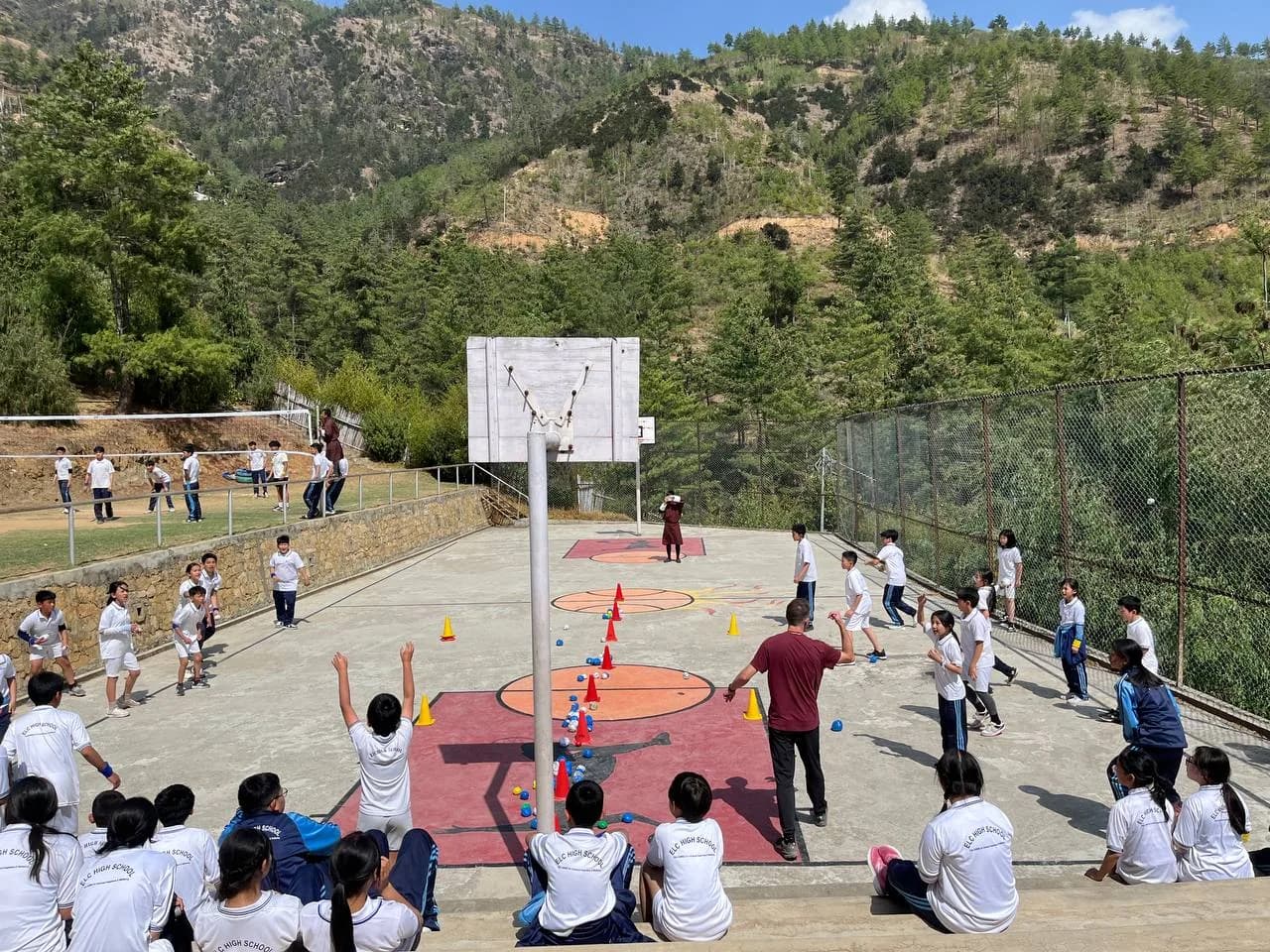
ELC High School students playing basketball on the school's court, with a coach and the Thimphu hills behind

Residential life

A home away from home.

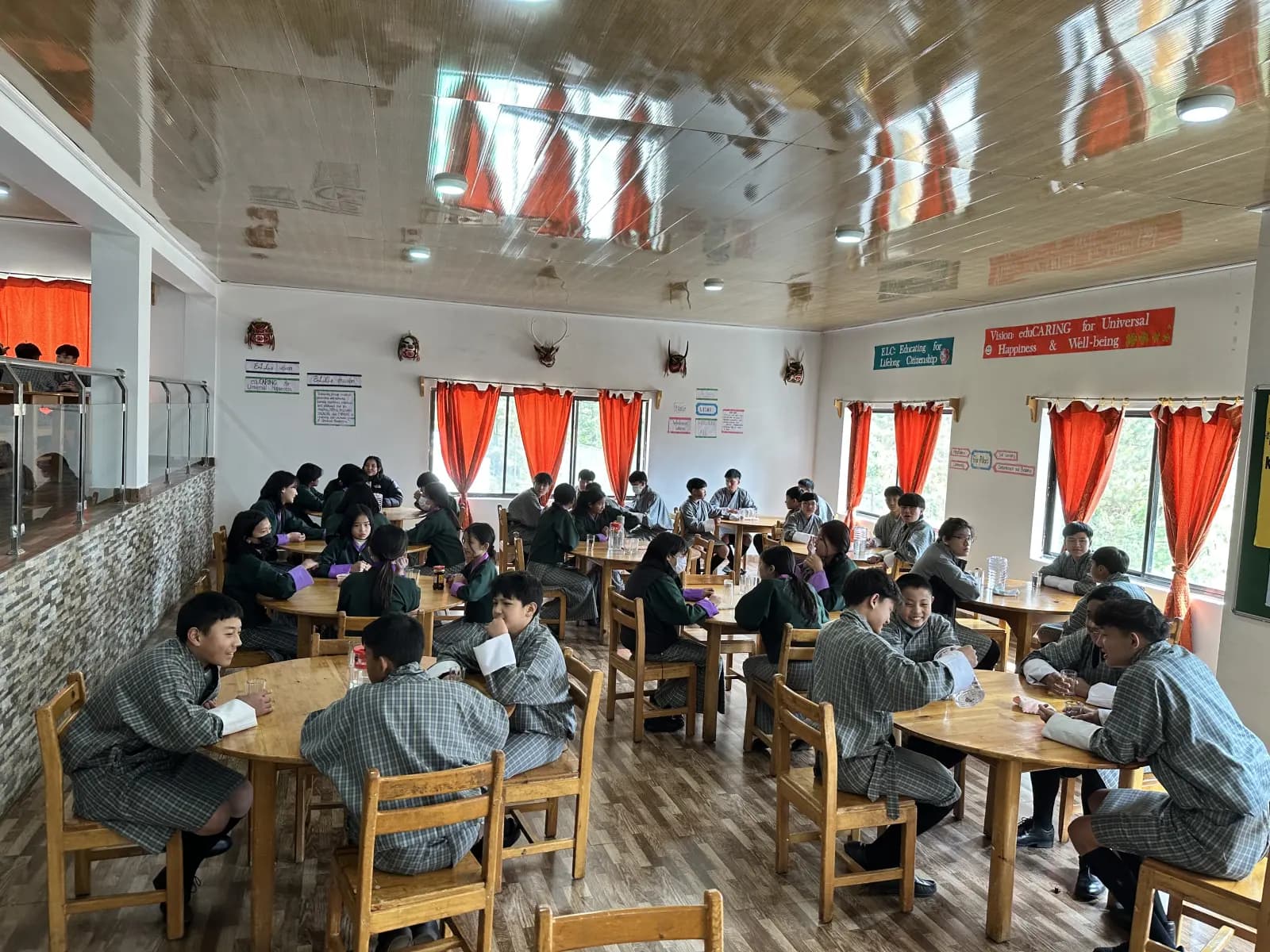
ELC students eating together at round tables in the school dining hall

Before Bhutan's modern education system, a child grew up learning at home: under the same roof as family, sharing stories and folktales, cooking the same food, working alongside the people who loved them. These were not activities separate from education. They were the education.

Thimphu has changed, as cities do. Parents are busy earning a livelihood for their children, and the household no longer offers the integrated learning it once did. ResLIFE is our answer to that gap: a residential living-learning community modeled on the traditional Bhutanese home, where the rigor of academic learning meets the social and emotional learning of family life.

A ResLIFE day is balanced across the mind, the heart and the hands. It begins with music and a mindful walk, runs through the school day, and turns in the afternoon to sport, nature, chess, dance and wellbeing circles. Evenings are for homework, dinner together, and a protected half hour of caregiver quality time, in which an adult sits with children without agenda. It is often in that half hour that a child finally says what has been on their mind.

This is not a separation from family. A period away from home deepens rather than weakens a child's appreciation of it, and children return at the weekend with new habits and ideas that they carry back into the household.


ResLIFE seeks four shifts in a child's experience of the world

  • IsolationCommunity
  • TransactionTrust
  • ScarcityAbundance
  • ConsumptionContribution

How we care

Presence first. Repair second. Punishment last.

The Teacher on Duty

Almost everything that later needs putting right begins in an unattended moment: a corridor between periods, the far corner of the field, the queue at the dining hall. A named Teacher on Duty is rostered for every session, break, meal and games period, and the roster is published each term so children and parents know who is available.

The Teacher on Duty is not a supervisor watching from a distance. They walk where the children walk, join the game, sit at the table, ask how the weekend was. The measure of a good duty is how many children were spoken with, not how many were corrected. It is the most ordinary thing we do and the most protective.

Restorative practice

Where prevention has not been enough, we sit down together. Our approach draws on Nangkha Nangdrig, Bhutan's own tradition of community mediation, which holds that it is better to lose in the village than to win in the court of law.

A circle begins with a quiet moment and moves through three questions. Everyone speaks and everyone is heard. The aim is not to establish guilt but to repair a relationship, so that the child who sits down to a mathematics lesson the next morning is no longer carrying an unresolved hurt.

ELC's own anti-bullying procedure follows national Ministry guidance, and we are working with the Jigme Singye Wangchuck School of Law and the Contentment Foundation to develop a restorative justice manual for schools across Bhutan.

  1. 1What happened?
  2. 2How did that make you feel?
  3. 3What can be done to make things right?

Collaborations

We learn alongside others.

A small school in Thimphu should not pretend to have worked everything out alone. These are the institutions we learn from, and contribute to, in collaboration.

International

  • The Contentment FoundationFour Pillars of Wellbeing
  • The Mind and Life InstituteCall to Care in Education
  • Harvard UniversityMaking Caring Common Project
  • Design for Change Global
  • UNESCO Happy Schools Framework
  • World Happiness Foundation
  • Eurasia Learning Institute

In Bhutan

  • Ministry of Education and Skills Development
  • Royal University of Bhutan
  • Royal Thimphu College
  • Paro College of Education
  • Jigme Singye Wangchuck School of Law
  • Gross National Happiness Centre
  • Bhutan Echoes: Drukyul's Literature and Arts Festival
  • Bhutan Centre for Media and Democracy
  • Bhutan Kidney Foundation
I learned that everyone needs wellbeing in their lives. I have changed and grown in a positive way because of wellbeing this year. It is a practice that helps me to calm down, to know my self worth, and to be kind, gentle and loving to myself and to the ones around me.
An ELC student

Admissions

Admission application 2027

Pre-Primary to Class X, day scholars and ResLife boarders. The form takes about twenty minutes and saves as you go, so you can stop and come back to it.

Step 1 of 8

Application details

Student type *
Admission type *

Current families

Re-enrollment & seat confirmation 2027

For families already at ELC. Please complete this form even if your child will not be returning — the school needs every answer on record.

Re-enrollment & seat confirmation 2027

Your details

Your child

Answer for every child at ELC, including any who are leaving.

Child 1

Child 1

Will you be re-enrolling your child for the upcoming academic year? *

Registration payment

No registration payment is due — you have told us none of your children will be returning. Please still submit the form so the school has your answer on record.
Registration payment due, by child
ChildEnrollmentAmount
Child 1Not returningNu. 0
Total to transferNu. 0

Thinking about ELC for your child?

Come and visit the campus, meet the teachers and sit in on a class.